
by Claire Sketch
My own experience with death began when I was fifteen. I didn’t really know how to hold grief and, like everyone, had to learn how to process what death means. At the time a practicing Catholic, I found little comfort in the funeral masses where I was promised that if I remained good enough at practicing my religion, one day I would see my deceased loved one again in heaven. I have one very distinct memory of brightness, of comfort during this time that I call upon even now, nearly 18 years later. It was a night after my grandpa died in December, Christmas ever nearing, a large group of family and friends were gathered at someone’s house. Hot food, twinkle lights, conversation murmuring blur in my head, but then people started to sing and the memory sharpens. Have you ever been in a room where, when singing starts, the air changes? I remember everyone singing every single word of “The Boxer” by Simon and Garfunkel, and it was so loud and so collective that I felt in that moment that I would be okay, that we would all be okay. It was this song, this singing, this togetherness that brought me the most relief, comfort and reassurance.
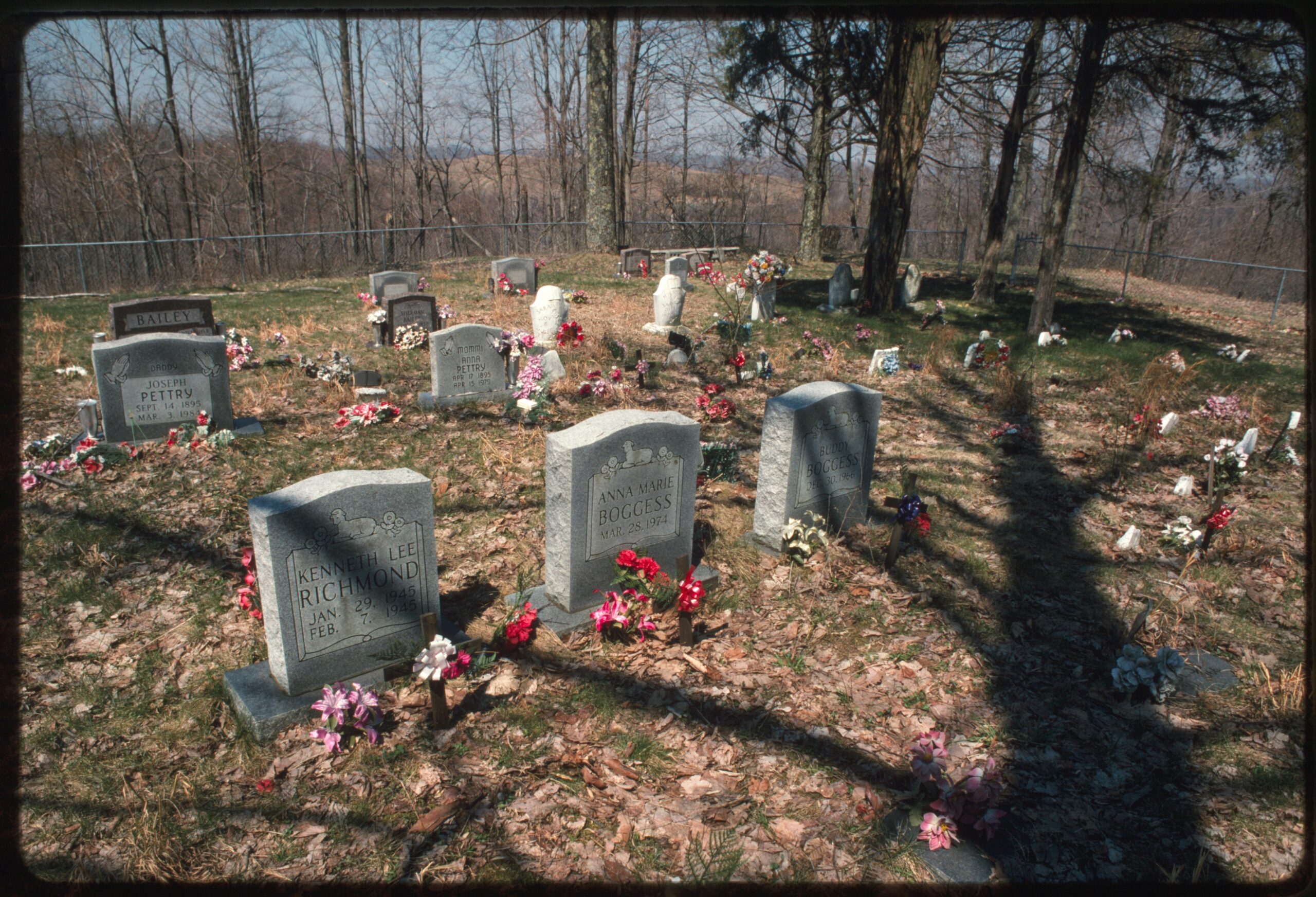
In my researching of death and dying traditions and practices in Appalachia, the most common thread, and I think the most beautiful one, is the emphasis placed on community and care. Maybe it resonates with me so much because my own memories of how community helped my own grieving process, I know the power of showing up for each other in grief to be true. Especially in 19th century Appalachia, before funeral parlors were widespread, death was not just for family to deal with and mourn in private, but a time when family, friends, and community showed up in their own ways to help not only the dying, but also the grieving loved ones left behind. No one in an Appalachian community had to face death alone.
Death traditions began before the death had even occurred in many cases. Whether a person was ill, became injured, or simply aging, deathwatching or “sitting up” ensured the dying would not pass on their own. Members of the family, close friends, and community were always present to ensure they remained close so that the person would not be alone in their final moments. These people brought food, took care of house cleaning, children and crops, and ensured that both the family of the dying person, and the dying person themselves were taken care of. This process allowed for family and close friends to remain present with their dying loved one, as well as feel the support of the community around them.
When a person died, a bell would be struck to symbolize each year of the deceased’s life. This was a way to let the larger community know that a death had taken place. Notices were also sent out in envelopes edged in black. The clock was stopped in the home so the time of death would be recorded, and mirrors were turned or covered so that the soul of the departed would not get stuck in the reflective glass. The men would now go out and dig the grave, and make a coffin if one had not already been made. The women would attend to the body by washing, clothing, and ensuring the corpse would be presentable for the wake. This involved sometimes sprinkling salt over the body, using cloths soaked in soda water or camphor on the skin to help prevent discoloration. Cedar chips, flowers and herbs would be placed around to help with the smell. The body would be laid flat to ensure it would fit in the coffin when time for burial came and coins or stone were placed on the eyes.
Once the body was prepared and set out in the home, a wake would take place. These began when the person died and lasted into the next day and night. The same community and family who took part in the “sitting up” would continue to gather to mourn, celebrate the life of the deceased, and watch over the body until burial could take place. Traditions could also include taking a photograph of or with the deceased or keeping braided locks of their hair and in some cases creating intricate wreaths of hair. After burial, funerals would take place in churches and there was great importance put on mourning. One elderly woman recalls “the idea was that if we really loved the dead, the we would show it for all the world to see. The wilder and more prolonged the demonstration of grief, the greater the proof of love.”
The community care that was extended and reciprocated around death was such a beautiful way of helping not only practically, but emotionally to be there to help the grieving process. These practices were so personal, and everything from dressing the body to building the coffin by hand was done by your community. I think we would all be richer in life if we could hold onto and connect with some of these practices that normalized death as a part of life, and ensured that no one would face it on their own.