
By Hilary Hirtle
Have you ever heard of the Mothman? What about Bigfoot?
Chances are, if you have ties to Appalachia, you’ve heard of at least one of these cryptids before. Cryptids are creatures that have been rumored to exist, but haven’t been proven by science. A good example of a well-known cryptid is the Loch Ness Monster in Scotland. Nessie has reportedly been seen by people for hundreds of years, but there’s no scientific proof that Nessie actually exists, despite all the sightings.
Appalachia is filled with cryptids shaped by its unique blend of cultures, ecology, and geography. The Appalachian mountain range, one of the oldest mountain ranges on earth, is brimming with dense, remote forests and abundant wildlife. Indigenous peoples, as well as people of European and African descent, have contributed to the region’s folklore and cultural traditions. All of these elements have influenced the creation of Appalachia’s mysterious, otherworldly, sometimes monstrous cryptids found in its folklore.
So, in this post, let’s get into some Appalachian cryptids—what they are, their origins in folklore, and why critical thinking matters when exploring cryptids online.
Appalachian Cryptids
Mothman
November 15, 1966, Point Pleasant, West Virginia. A 6-7 foot tall humanoid creature with glowing red eyes and huge wings glided after two couples driving together along State Route 62. The next day, the sighting made the Point Pleasant Registry: “Couples See Man-Sized Bird…Creature…Something.” Additional reports over the next thirteen months soon followed. No one was sure what this creature could have possibly been— nothing like it had ever been seen before. A biologist at the time suggested it was a sandhill crane, but stories and reported sightings of Mothman persisted.
Bigfoot
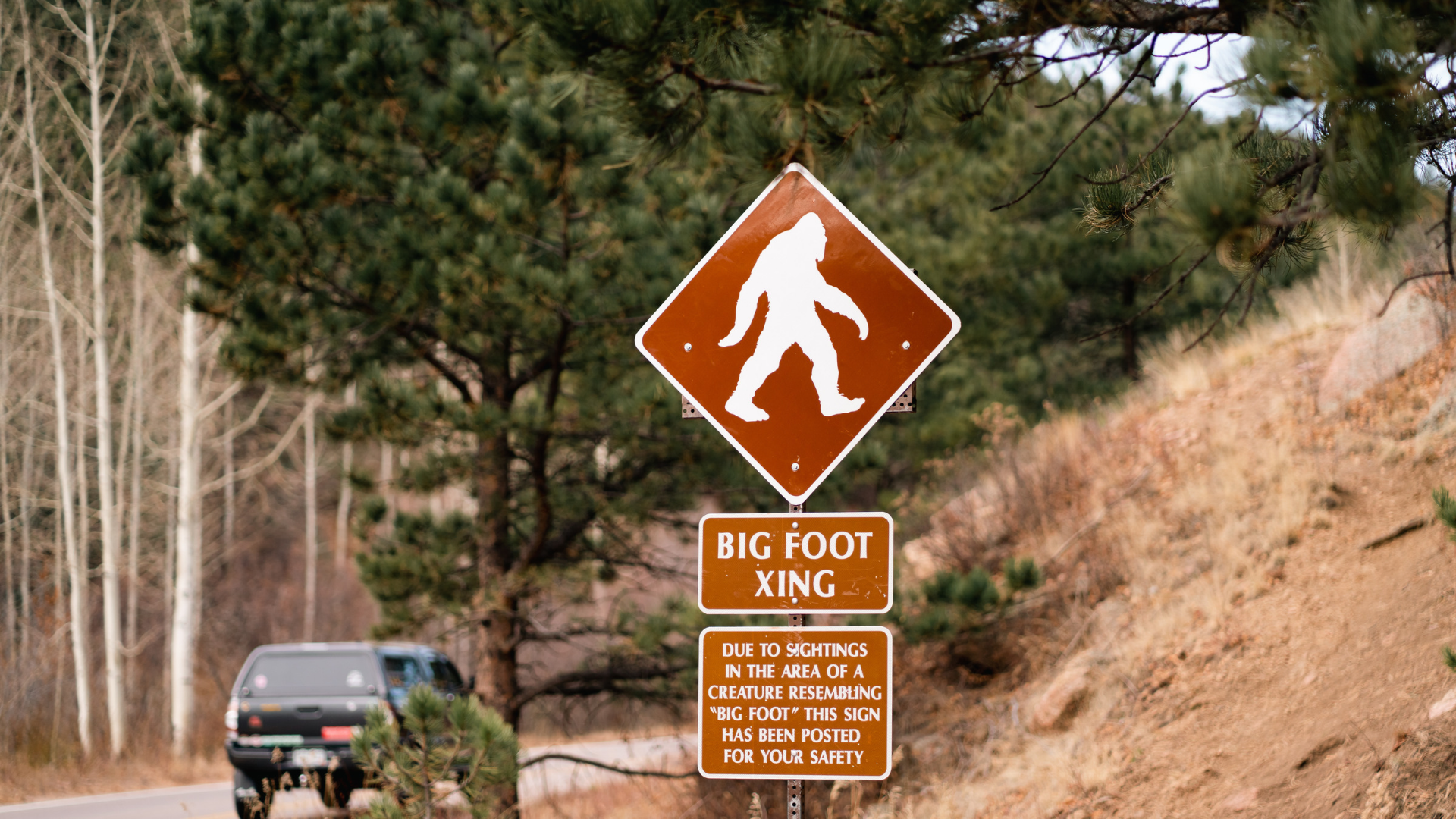
Bigfoot, also known as Sasquatch, is a large, bipedal, hairy, humanoid creature, sometimes described as aggressive, sometimes elusive and shy. Tales of bigfoot-like creatures living in the woods can be found in folklore from across the world, including Appalachia. In West Virginia, the bigfoot-like cryptids that reportedly roam the Mountain State have sometimes been called The Old Men Of The Mountain; in Kentucky, there’s the Spottsville Monster; and in Virginia, the Wood Booger. Appalachia’s rich mix of cultural traditions and folklore influenced the creation of the various Bigfoot cryptids rumored to be living in Appalachia.
Booger Bear
A large, bear-like creature with a bulldog-like face is reported to roam parts of eastern Kentucky, Tennessee, and western Virginia, preying on livestock. Origins of the booger bear seem slightly obscure. The term “booger” itself has connections to older Scots and English words, such as bogle or bogey, used to describe a ghost, specter, or demon.
Some cryptozoology theories suggest that booger-bears are the thought-to-be-extinct giant short-faced bear, still roaming North America. However, the only prominent species of bear found across modern Appalachia is the black bear. Perhaps the booger-bear is a misidentified black bear? Maybe it’s a black bear with a genetic mutation affecting its features? We may never know.
Ogua
In the depths of the Monongahela River in West Virginia is rumored to lurk the Ogua, an enormous creature that appears to be a cross between an alligator and a snapping turtle; some sightings claim the cryptid has two heads. In 1745, it was reported that the monstrous creature dragged a 12-year-old boy under water when he was out fishing with his family. The boy was never seen again.
Like with many cryptids, finding the exact origins of the Ogua is as murky as the waters it reportedly lives in. Snapping turtles can be found throughout the Monongahela River and its tributaries and their presence may have contributed to the legend of the Ogua that persists to this day.
Researching Cryptids Online
There are dozens more Appalachian cryptids to explore and, for those interested in learning more, exploration often begins on the internet. Like with researching any subject matter, it’s important to use critical thinking when encountering information about cryptids online. This is because critical thinking helps you to avoid being misinformed with incorrect or misleading information. Since cryptids are neither confirmed nor denied, it can be hard to find reliable sources on them. Indeed, many cryptids are known only through solo accounts or word-of-mouth.
With that being said, here are some tips to help you explore more about Appalachian cryptids:
- Don’t immediately take social media posts, comments, and pictures of cryptids at face-value.
- Don’t immediately trust AI outputs or AI results from search engines as those can contain incorrect information and AI is known to make mistakes. Always back up information with additional sources.
- Seek out citations and original sources of information.
- Learn more about Appalachian folklore and folk customs beyond cryptids. The Library of Congress’s American Folklife Center is a good starting point for further research and exploration.
- Learn more about Indigenous Appalachians and Indigenous Appalachian cultures from Indigenous perspectives and other reputable sources. West Virginia University Libraries’ Indigenous Appalachia exhibit offers a good starting point for further exploration.
- Explore Appalachian folklore alongside European (particularly Irish, Scottish, English, and German) traditions that have influenced this region’s legends.
- Learn about Black Appalachian folklore and cultural traditions, and how Black Appalachians have shaped stories and storytelling throughout the region.
- Learn more about the wildlife that has inhabited the Appalachian region, both past and present.
Wherever your cryptid research leads you, I hope you come away with a deeper appreciation for the cultures, landscape, and wildlife that make up Appalachia.