
By Claire Sketch
I remember as a child going to the Appalachian Festival in Cincinnati, Ohio, with my family and stopping to watch an artisan dip beeswax candles. For whatever reason, it completely enchanted me. The slow, almost meditative motion, the pairs of candles hanging to dry on racks all around, the sweet warm smell of beeswax. Every time I went back to the festival, I always hoped to catch someone dipping candles and often thought about trying to make some myself. Candle making is just one of many craft traditions from Appalachia. As early settlements began in the region, living and making homes in places far from centers of industry meant that handmade tools and objects were necessary for a functional life.
What we today would consider artisanal crafting and folk art began in Appalachia as simply creating what was needed. These crafts were essential instruments rooted in practicality and usefulness. Craft tradition is incredibly rich in the region, and often times combined the Indigenous crafting traditions of the area with the settlers’ European traditions. Basket making, weaving, candle making, woodworking, looming, quilting, and pottery all provided useful items that also showcased artistic expression. These objects all had clear purpose, longevity, and served as decor for homes. Quilts made for warmth, candles for light, pottery for tablewares, baskets for storage: in everything that was made, there was also a deep sense of self sufficiency, using what materials were available and what skills had been taught, cultivated, and shared. There was also a sense of artistic expression in that they could make each item intentionally and to be beautiful in the home. Things were made with durability in mind as well, it was important that they could be used for a long time.
Quilting often involved detailed patterns and intricate weaving. Sometimes the quilts even shared memories and stories of the families that they wanted to hand down for generations. Techniques included patchwork, appliqué, and hand quilting. For some special occasions, like a wedding or a burial, special quilts were made with particularly elaborate designs. Named blocks such as log cabin or star were used to help create motifs and tell stories in the quilt. Fabrics often came from various scraps from the home that could further tell the story of the place, people, and the time the quilt was made. The social aspect of quilting was also important. Women gathered from surrounding mountains to work of a project together, sharing fabric, news, and each other’s company. Quilts can show the community’s history and identity the same way they can for individual families. Quilting groups and guilds still exist today for the sharing of the craft and socializing.
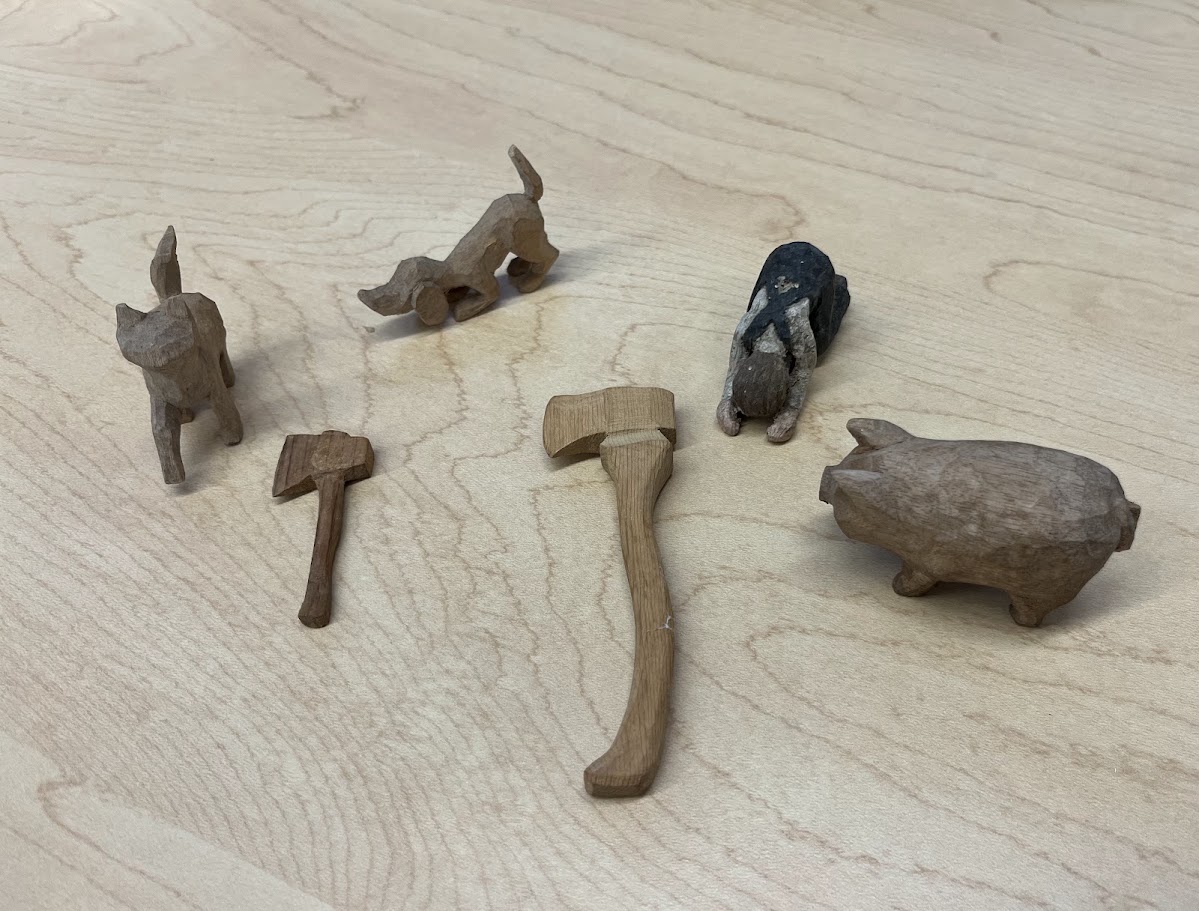
Motifs in Appalachian craft exist far beyond quilting. Wood carvings, pottery, and candles can all tell the story of the region and peoples who made it. A carving would be made of specific regional wood and could commemorate a family or community’s story. The clay and glazes used in pottery showed the mineral palate of a place. Candles from rendered fat or beeswax showed what kind of season an area had. In each made object, it is possible to see a kind of living story, one that tells about need and function as well as history, migration, tradition, and community values.
As mass production took off, the need for these items steadily decreased and they became more rare, as did the teaching of them. But, with the resurgence of the arts and crafts movement in the late 19th century, a specific interest in Appalachian crafting and folk art was renewed. This created more opportunities for makers and artisans to engage with and learn traditional crafts. With more demand, teachers, community members, and elders can pass on their knowledge and help others engage with these crafts in ways that not only create beautiful things but also honor and protect heritage. There are many ways for anyone to take a class in something that might interest them. Folk and art schools exist in person and online and include places like the Augusta Heritage Center, Berea College, the John C. Campbell Folk School, and the Appalachian Arts and Crafts Center.
This past winter, near the solstice, I heated a double boiler of beeswax on the stove in the home I share with my sister. We took turns dipping wicks, chatting, keeping warm in the the glow and heavenly scent of hot beeswax. I thought about all those years watching artisans dip their own candles, and the light the candle would provide me through the rest of the winter. The candle itself is small and special only to me, but it is well made and I am made more well for having taken the time to make it.