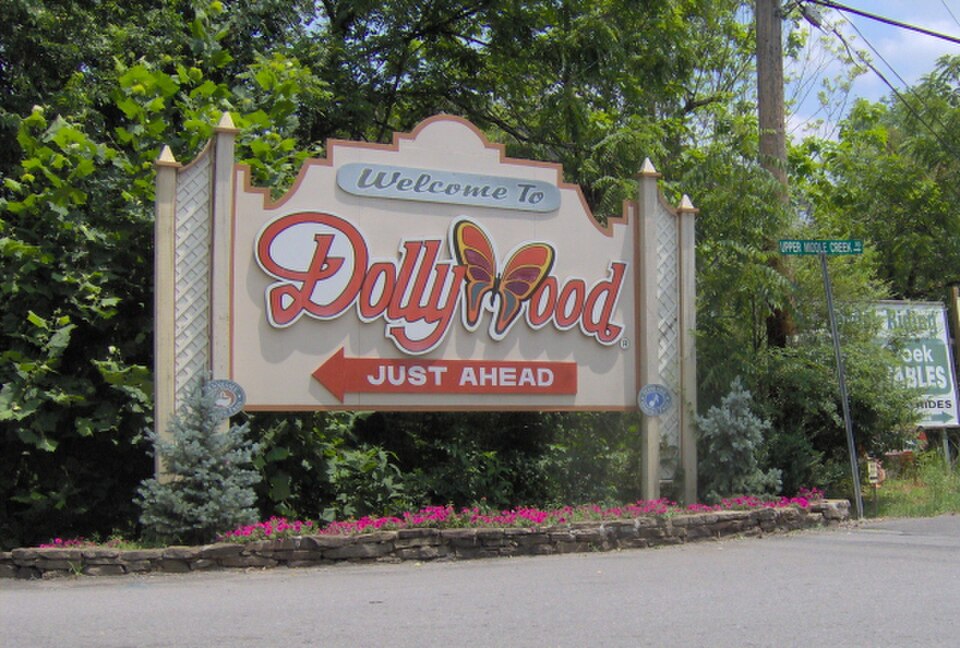
I can’t remember exactly what year it was—probably 2007, if my memory serves me right—but I remember this special summer memory. I was staying with my Nan and Pap in east Tennessee, like I did most summers and winter breaks. Their house on Wagon Road was my second home, far away from schoolwork, cable television and computers. Most days were measured in rounds of card games, piddling with a craft or two, quick trips to Food City, swinging at the park or swimming at the community pool, reading books (for fun), long afternoons on the porch playing I Spy, and eating whatever Nan was cooking (usually spaghetti). And then there were the extra-special days: Dollywood or aquarium days in Gatlinburg.
Pap was a man of routine: stop by Vanda’s gas station for his lottery ticket and a refill on his Grizzly Wintergreen, haul the trash to the county dump, and drive around town hunting for the lowest gas prices while simultaneously burning through half a tank of gas in the process.
Nan was always getting into something: lunch with a friend, Bible study, hunting for bargains at yard sales, hitting up Goodwill on its everything’s-a-quarter days, or making her second–or third–cup of coffee in the kitchen.
I have this memory of lazily following Nan around one morning while she got ready to go out.
“Me and a friend was supposed to do this little act at the cancer benefit on Friday, but she called me yesterday sayin’ she’s sick. How would you like to be Kenny Rogers for me?”
“Who is that?”
“He’s a country singer. He and Dolly Parton recorded this song together years ago.”
“Are they married or something?”
“No, no. But they sure do make good music together.”
She was standing in front of the bathroom mirror, applying her foundation, blush, and signature raspberry-colored lipstick—the same routine she went through every time she got ready to leave the house, whether it was church, a Red Hat Society meeting, or the dollar store. Nan was retired; she could take her sweet time getting ready and looking good.
I was lying on her perfectly made bed when she came out of the bathroom to turn on the record player-radio-CD player trio someone had gotten her for Christmas the year before. It was already loaded with a CD. “Islands in the Stream” started playing.
“This is the song we’re doin’,” she said, pointing to the track number on the back of the CD case.
Ah, yes, Dolly. At ten, I knew Dolly Parton as the woman behind Dollywood long before I knew her as a singer-songwriter. The park was about thirty minutes from Nan and Pap’s house, and every Christmas they gifted us season passes. Our Dollywood days were long: riding rides, standing in lines, eating funnel cake, watching shows, and eventually falling asleep in the backseat while Pap drove us home down the winding roads of Sevier and Cocke Counties.
For a long time, that was Dolly Parton to me: the queen of this magical Appalachian theme park, Hannah Montana’s Aunt Dolly, and some Nashville starlet whose songs I hadn’t been interested in until now. I knew the mythology of her, though. I knew she was famous and beloved. I knew she had made a place in the mountains where families could spend the day together and leave tired and happy. I knew she was quick-witted. I knew she believed you could dream big without losing sight of where you came from, and that kindness and humility mattered.
This was also one year after Taylor Swift’s debut album came out, so I was learning about fandoms pretty quickly—thank you, YouTube, MySpace, and taylorswift.com.
“Are you a Dolly Parton fan?” I asked.
“You know, I never liked her music much, but I’ve always liked her.”
This was a strange concept to me at the time. I didn’t understand how you could be a fan without being a fangirl. Those things were one and the same to me. Being a fan meant knowing every song, owning the albums, knowing the lore. I didn’t yet understand that you could love what someone represents and what they mean to people, without knowing every song they’ve ever made.
“I’m practicing for the benefit tomorrow,” she said. “Do you want to sing it with me? I have a Dolly costume. I’m sure we can come up with a Kenny Rogers costume.”
“Okay!” I said, nervous but excited. “What’s it for again?” I asked, trying to assess the audience.
“It’s for my survivor’s group. The cancer support group. We’re having our annual park day. There’ll be food and games and entertainment. It’ll be a good time.”
Old people, I thought. Ugh. Probably no kids my age. But Nan was excited, and that was enough for me.
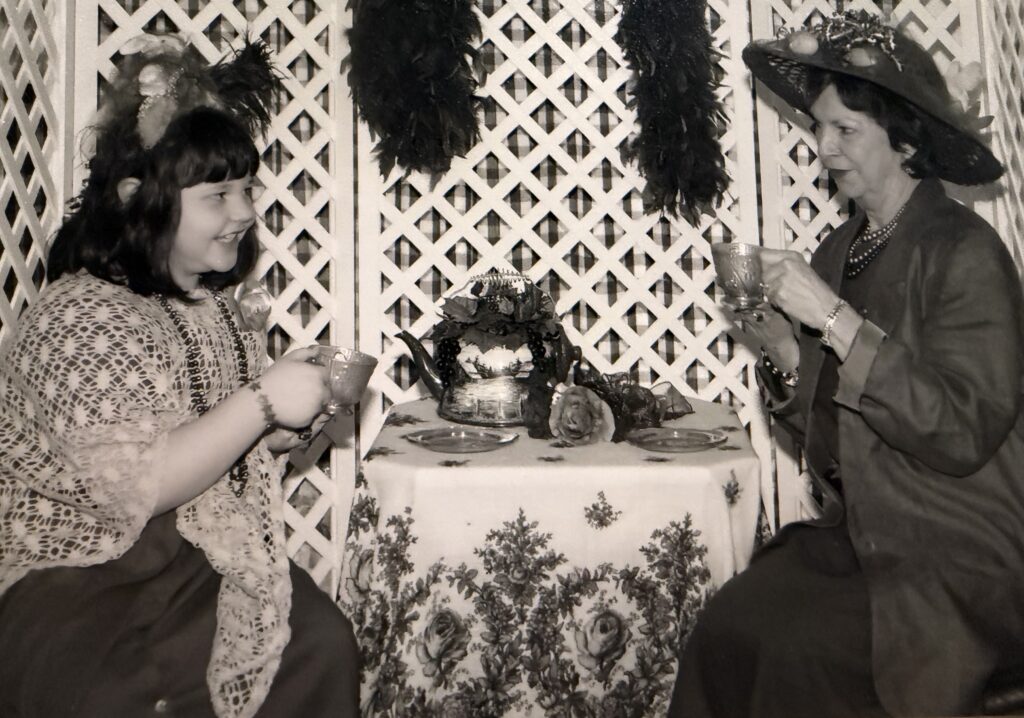
I listened to the song over and over for hours, learning the lyrics, paying extra attention to Kenny’s parts. We practiced together in the living room, lip-syncing to the song. We pieced together my costume: an East High Wildcats High School Musical t-shirt, boot-cut jeans, sneakers, a kid-sized broom from the outdoor playhouse that we decided could double as a guitar prop, and Nan’s chemo wig, which had been sitting in one of the guest room closets.
Nan had a rare cancer in the early 2000s, when I was too young to really know what cancer was. I remember my mother telling me she might lose her hair, but, thankfully, she never did. The wig was short, curly, salt-and-pepper gray and very, very itchy. It didn’t exactly scream “KENNY ROGERS,” but it would do.
The day of the performance, I was right. There weren’t many kids at this joint. There was the typical spread: potato salad, baked beans, fried chicken, barbecue, pimento cheese, crackers, lemonade and sweet tea. The audience sat in foldable camping chairs. I don’t remember much else about the afternoon except that I needed to use the porta-potty before the performance, and it was gross.
Then the emcee called us up.
I put on my wig and became Kenny Rogers. Nan put on her blond wig and drew on a beauty mark under the corner of her lip with an eyeliner pen.
The track started playing from a karaoke CD player.
Nan and I gave the crowd a performance of a lifetime—like we were on RuPaul’s Drag Race having to lip-sync for our lives.
I was ten years old, dressed like Kenny Rogers and holding a broom as a guitar at a cancer survivors’ annual park day. And I wasn’t embarrassed. None of these people knew me, and, more importantly, we were making them laugh, smile, and sing along. Something about Nan made it impossible to feel self-conscious; she had a way of making everything feel like a good time, no matter how silly we looked. And something about Dolly made it impossible to take yourself too seriously. You could put on the wig, draw on the beauty mark, and be whoever you wanted to be up on the stage.
That’s what I think about when I think about Dolly Parton and the legacy she leaves behind. Not just Dollywood, although I have plenty of memories there. Not just the songs, the rhinestones, or the big blond hair. I think about the immeasurable ways Dolly gifted joy throughout her life, and how that joy becomes memory.
Maybe this is me generalizing from my own experience, but I think there is a particular kind of wit, wisdom, and talent in the Appalachian women I’ve been lucky enough to know—one that can’t really be taught or replicated. I’ve experienced it as something passed down through example: the stories they repeat, the food they make, their quippy jokes, the way they show up with a meal when somebody is sick or has had a baby, the ones who organize all the school and family reunions, and all the work they do without calling it work. While there will never be another Dolly, I think her spirit lives on in so many of us. I think a lot of Appalachians and urban Appalachians know exactly what I mean. So many of us have an Aunt Dolly. Maybe in the memory of Dolly herself. Or maybe she’s a grandmother, a sister, a neighbor, a church lady, or a friend who’s become family. Someone who wraps love, generosity, and kindness around everyone within reach. Someone who makes you feel a little more like yourself simply by being herself.
I’m terribly sad to hear of Dolly’s passing. I’ve cried at every heartfelt tribute, every clip from an old interview or performance, and every story about the many ways she touched people across the country. There is something about Dolly that feels deeply familiar to so many of us Appalachian folk. As a (now) urban Appalachian, I think often about the way she never lost touch with where she came from, no matter how far her life carried her from the mountains. She showed us that leaving home doesn’t have to mean leaving everything behind. I’ve always found comfort in her song “Wildflowers,” as it speaks to my own urban Appalachian experiences:
The hills were alive with wildflowers
And I was as wild, even wilder than they
For at least I could run, they just died in the sun
And I refused to just wither in place
Just a wild mountain rose needing freedom to grow
So I ran fearing not where I’d go
When a flower grows wild, it can always survive
Wildflowers don’t care where they grow
I’ll always be grateful that one of my memories of her is tangled up with one of my favorite memories of my Nan. Their voices carry the same east Tennessee lilt. Their beauty beyond compare. And maybe that’s why, tonight, I’ll play “Islands in the Stream” and let it carry me back to that little park pavilion in east Tennessee, to when I was ten years old. Nan is Dolly. I’m Kenny Rogers. And for three minutes, we’re a duet.