
By Mike Templeton
The Urban Appalachian Community Coalition has made it a priority to combat flawed and harmful images of Appalachian people. One of the main priorities in the early days of the Urban Appalachian Council was to resist such perceptions of the new migrant Appalachians in Cincinnati, and this was effective in our establishment within the overall cultural life of greater Cincinnati. That said, there is still work to be done on this front; the internet age and the age of mass commercialization have created complexities in the image of Appalachians that are both new and old at the same time, while the ways the images are commercialized and transmitted are entirely new.
We all know the images of things like Mountain Dew, for example, and the entire Bob Evans brand is built out of an Appalachian set of images designed to capture the public imagination, tapping into the ideas of a more pure and idyllic rural life. This kind of marketing and image-making has been around for a long time, but in the age of the internet in which image is everything, the Appalachian image takes on a new power.
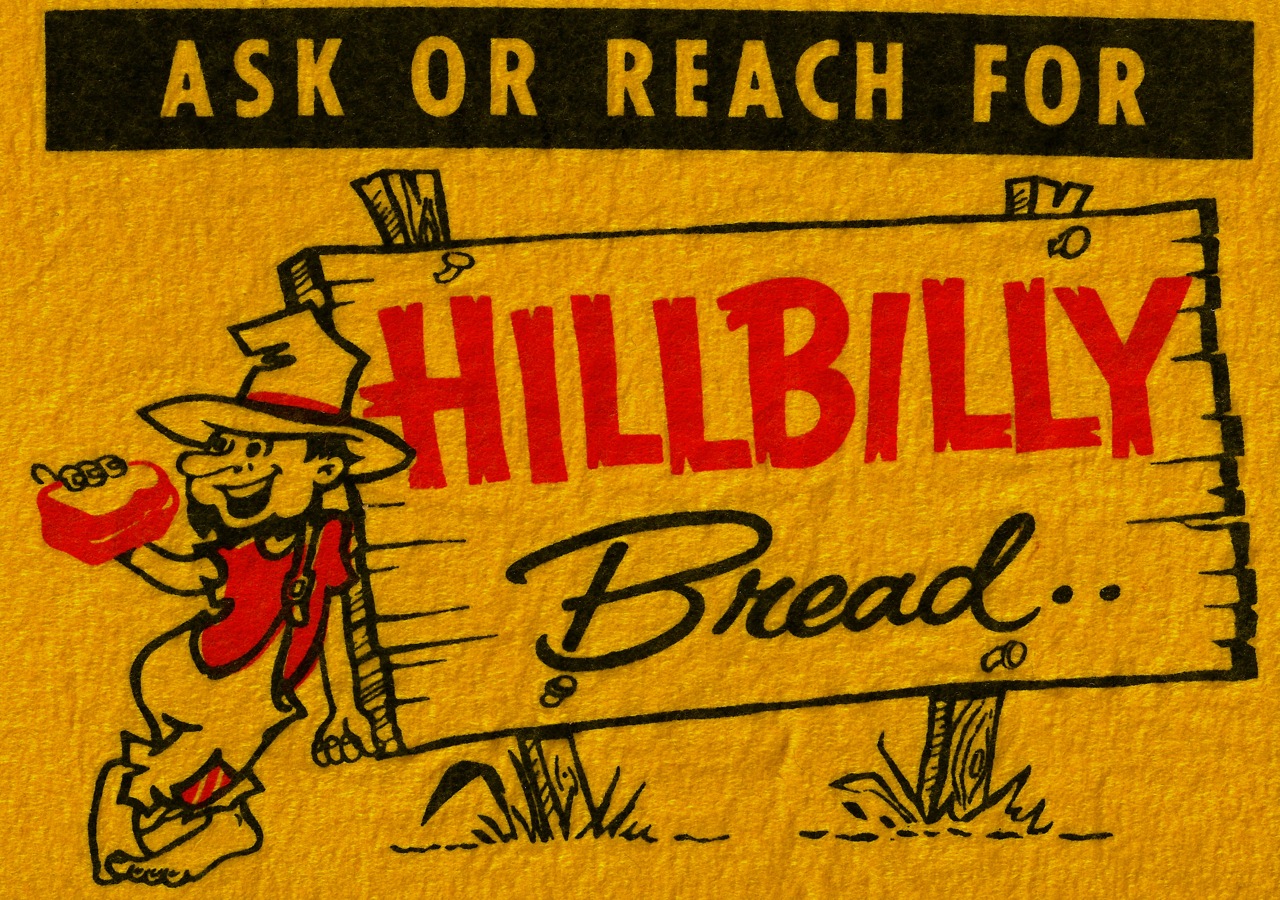
Sometimes, the image and idea of Appalachia and Appalachians is commercialized even by Appalachians themselves. If you search the key words “hillbilly brand names,” you turn up the Hillbilly Brand, but you also turn up an endless list of producers that use the word “hillbilly” to sell their product. Most of these are from the Appalachian region, but not all. This new image for the digital age includes men in camo t-shirts sporting trucker hats. One company ties all of this to a specific political agenda that is deeply conservative. While it is true that much of Appalachia tends toward the conservative, the suggestion that the “authentic” Appalachian is conservative is just nonsense. Most of these products in a Google search try to tap into the same old narratives of the simple, hardworking, rural yokel who cannot be bothered with the world beyond his holler (the images are overwhelmingly male). Finally, you will inevitably find the Smoking Mountain Distillery products in which the mountain moonshiner is finally rehabilitated for the age of the hipster brand. Good old moonshine, completely legal, and available at any liquor outlet is now tamed, branded, and packaged up so you too can be a real live mountaineer.
Paul Lester’s doctoral dissertation offers a lengthy and complex study of the ways the image of the Appalachian or hillbilly has lent itself to outside exploitation over the decades. Lester’s study covers the early days in which the extraction industries such as coal and timber justified their complete appropriation of land, resources, and human labor with the idea that the mountain folks were just too dumb and backward to help themselves, and takes his analysis up to our very modern set of images which capitalize on the nightmares of drug addiction and poverty that remain in the wake of two centuries of corporate exploitation. In our current age we can look to the films that present Jesco White, the so-called “Dancin’ Outlaw,” as a hard-drinking, glue-sniffing, and fighting mountain dancer. White is in fact a West Virginia step dancer, but he is also a tragic victim of mental illness and years of dangerous drug abuse, the kinds of drug abuse that ravaged rural Appalachia in the first decade of the Twenty-first Century. The image of Jesco White provides a watered-down and easily appropriated style for suburban punk and rock and roll culture, but the reality of White, and his entire family, is one of poverty and death. In so many ways, the contemporary appropriation of the image of Appalachia and Appalachians remains every bit as lethal and cruel as it was for early twentieth-century coal miners. The lethal chemicals change but toxicity remains the same.
April Dye presented her study of some of these issues at the Appalachian Studies Association conference in 2018. Dye explains that years of resistance toward stereotypical representations of Appalachian people have been successful in tearing away at many of these harmful images and the assumptions associated with them. The old images of ignorant, dirty, and in-bred mountain people has been the site of fierce battles that have been successful in changing public perceptions and attitudes in many ways. But as Appalachians destroy the old stereotypes, the commercialization of the images of Appalachians has brought a new set of problems. Dye asks the question, “Are people beginning to value rather than disparage traditional Appalachian culture, or is this just a case of consumption of the other not unlike [cultural critic] Edward Said’s concept of Orientalism, in which people are using Appalachia but have not actually changed their perceptions of the region and people?” What Dye refers to here is Said’s theory that outside appropriations of a culture are nearly always utterly removed from that culture and never provide a valid representation of that culture, rather create images based on outside and flawed assumptions that cause harm. The upshot here is that the commercialization of the “hillbilly” does little for Appalachians and everything for corporate wealth that has no interest in the well-being of Appalachian people.
At the heart of so much of the work of the Urban Appalachian Community Coalition’s Research Committee is staying on top of new developments in the ways Appalachia is represented. It is true that our perceptions and assumptions of Appalachian people have changed and become more positive and realistic over the decades; the old stereotypes are on the wane, but new ones are entering into the public imagination. We are never going to stand in the way of individuals who have begun their own entrepreneurial work that names their own Appalachian heritage. We do, however, think it is critically important for everyone to be acutely aware of how we are representing Appalachia for the world to consume. Appalachia belongs to all Appalachians, including the urban Appalachians, and we are a great multitude that will always defy simple stereotypes.
Works referred to in the article:
Dye, April. “Changing Perceptions of Appalachia: Stuck in the past or moving towards the future?”
Robertson, Paul Lester. The Mountains at the End of the World: Subcultural Appropriations of Appalachia and the Hillbilly Image, 1990-2010.
Michael Templeton is a writer, and independent scholar. He is the author of The Chief of Birds: A Memoir published with Erratum Press and Impossible to Believe, published by Iff Books. He is also the author of Collected Apoems, forthcoming from LJMcD Communications, The Ohiomachine, forthcoming from Dead Letter Office/Punctum Books, and Nod: On Digital Exile forthcoming with Erratum Press, the Academic Division. Check out his profile in UACC’s Cultural Directory. He has published numerous articles and essays on contemporary culture and works of creative non-fiction as well as experimental works and poetry. He lives in West Milton, Ohio with his wife who is an artist.